I was in college when I was initially put on oxygen. It was during spring semester of my sophomore year. My breathing had been gradually been declining to the point that I needed oxygen. It was around the time that I was diagnosed with CVID. I had had many boughts of pneumonia, been the hospital quite frequently, and intubated ~10 times in 6 months. I came back to campus after being in the hospital, discharged on home oxygen. Some people in the administration asked if I could go to school. I remember when I was asked this that I just stared at the person asking in a complete state of puzzlement. I could not grasp why they would be asking if I could be at school. My doctor had cleared me physically. I knew no other reason why I couldn't/shouldn't be there. I asked them why they felt this way. They said, "well you're on oxygen" as if this statement explained everything. I looked at them and told them that being on oxygen hadn't changed anything. My lungs didn't work; I had difficulty breathing and need oxygen to help me, but my brain still worked perfectly fine. In fact, It worked better than at least 90% of the other students. I had never really considered myself disabled. I have never considered myself disabled, even through all of the challenges I have had to overcome. I remember starting college as a freshman and receiving a letter in my school mailbox asking me to meet with the school's disability coordinator. I was completely confused. Why did I need a disability coordinator? I wasn't disabled. When she suggested I get accommodations I could use for my classes, such as more time on exams, the ability to turn assignments in late, or take exams late. I got angry at this. I didn't need accommodations. There was nothing wrong with my brain, and I just wanted to be treated as every other student would be. I later learned to take these accommodations because they did help when I was sick and in the hospital. Accepting these accommodations didn't change how I was graded. It didn't mean I was weak, couldn't hack it, or was stupid. I was graded on the same level as every other student. I didn't have to use the accommodations set up if I didn't need them, but if I got sick and was in the hospital, they were there to help me out. It didn't give me an advantage over other students. The same was expected of me as them, but it evened the playing field, as I had extra challenges to overcome as a result of my disease, that they did not have. They were tools to help me be successful in such an environment. Though my lungs didn't work, my brain did.
For the same reason, I didn't get a handicap sticker for my car until several years after I was put on oxygen. I never considered myself handicapped or disabled. I had two legs; I could walk. I needed oxygen to be able to get around, but other than that, it didn't limit me too terribly much. There were even times I tried to run the track, with the oxygen attached to my back of course. I put the oxygen in a small backpack and ran the track. My goal was to be on the track team. I wanted to prove that someone with a handicap, like me, could do just as much as an able bodied person, so long as they had the modification to do so, such as wearing oxygen or having a prosthetic leg. One of my friends in college had been born without any legs. This didn't stop her at all. She was on the softball team, an excellent athlete. With her prosthetic legs she was able to do nearly everything anyone else could. I knew of people who were considered able bodied, but were able to do much less. It wasn't until my lungs had declined quite significantly and I was in chronic respiratory failure, that I broke down and got the sticker. By that point, I had no other options. I couldn't walk long distances and could only go anywhere if there were handicap spaces available. Unlike most people who would love to have a handicap sticker because they could park closer, I had fought to not need one. For me it was a defeat, one that symbolized my disease had won. I mourned the day that I got my handicap sticker. It represented the extent of the decline in my health. Then I needed a cane to walk. Now my mobility was affected. I couldn't walk long distances. I certainly couldn't walk long distances without the cane. Each thing was a blatant reminder of the progression of this disease and the losing battle that I was fighting. Now I'm in a wheelchair.
While part of a disability is about the functional loss of ability, there is also the body image, and how you now see yourself. The functional loss is honestly the easiest part to live with. Yes, you have difficulty walking, but you can use a cane, walker, or wheelchair, whatever the case may be to get from point A to point B. That isn't the problem. The real problem comes in how you see yourself. You used to be completely physically able. You could go and do whatever, whenever. Now you are limited and in many ways; you become isolated. It is hard not to lose your sense of self in the process, to remember that you are still a valid and worthwhile human being. Your worth as a person is not based on what you are physically capable of doing, whether you are able to walk, but on who you are as a person and the value you bring to those around just by being yourself.
Before the trach I had planned on tutoring through the summer. I had tutored a student in biology and this year she would be taking chemistry. She struggled academically and had a learning disability. Her biology teacher had suggested taking chemistry in the community, which wasn't a true chemistry course, but a nonsense course. She didn't think she was capable of doing the regular chemistry course. My student wanted to go to college, and colleges would require the regular chemistry course, not the chemistry in the community course, to be considered for admission. I planned on helping her through the summer, introducing her some of the key principles, so that when she saw them in class she would already have a basic understanding. I would continue to tutor her through the class. The trach prevented me from being able to work with her over the summer. I was unable to talk and this made tutoring quite difficult. After doing rehab my speech had improved and I wasn't concerned with communication. Her mother still needed a tutor for her, and though I had a physical difficulty and couldn't yet drive, so long as she came to my house or my mom drove me to meet her, we could still have lessons. My brain hadn't been effected. This is the first time she has come to see me. I was so nervous. I considered attempting to greet her using the walker, not the wheelchair, so she wouldn't see me as physically disabled. I worried that she make judgements and think I was less capable. My mom had to remind me that she wasn't paying for my ability to walk, but for my brain and knowledge, which had not been affected by my illness. While this is true, it is hard not to let a physical disability affect your value and worth as a person. You feel deficient, and this is carried over into other aspects of your sense of self. I have become very self conscious and almost ashamed of my physical disability, not wanting others to see me in the wheelchair. It is important for me to remember that I may have a physical disability, but I am still perfectly ABLE, able to think, able to be a valued person, able to have a purpose. This hasn't affected my worth. There are still many things I am not just capable of doing, but that I excel. My ability to walk hasn't affected this in any manner. My thoughts return to my friend in college born with no legs. This was a strength not a weakness. I am not DISabled, but rather, disABLED, the concentration being on what I am ABLE to do, not what I am not.
Showing posts with label Oxygen. Show all posts
Showing posts with label Oxygen. Show all posts
Friday, September 23, 2011

Sunday, August 14, 2011
Zebras - a rare breed

Even here, in rehab, I am a zebra. I am not a "normal" trach patient. Most patients that they see here that are trached, have temporary trachs. They have been in some sort of accident or trauma. For them, the trach is temporary. They had it put in because they had to be vented for an extended period of time while they recovered from the accident. As soon as they get here, they cap them. The trach is then removed as soon as possible. For me, circumstances are different. The trach is not temporary. I was not in an accident, nor did I have any type of injury to cause me to need a trach. The trach was put in due to a disease process and the fact that I am in respiratory failure. The trach has given me a chance at life. Without it, I would not be alive. It is not a temporary thing, and for the doctors here, this is a different concept, something that in some ways is difficult for them to wrap their mind around. Rather than focusing on getting the trach removed, I need to focus on learning how to live with it.
I know that I am not the typical trach patient. I understand that this can be a challenging concept for doctors. They are not used to seeing a person so young with a permanent trach. The first thing they discuss with me is when we can start capping and weening me off the trach. They can't comprehend that this is permanent, well at least as long as I want to be alive, since it it the trach that is keeping me alive. People tell me that nothing is for sure. That is true. Something could happen or they may discover something new that will help treat my lungs, so that I don't need the trach, but this is not a guarantee. It can't be counted on, and in all likelihood, I will have the trach for as long as I live. The trach has allowed me to breathe. Without it, I'd be back in the hospital, on bi-pap or worse, fighting for every breath, knowing that my body could go on this way for short period of time before it gave out.
I am very protective of the trach. Patients with trachs have to be to some extent. It is your airway, and how you breathe. It is also direct access to your lungs. Thus, you must be vigilant to prevent infection. I am a little more protective than some because of all the challenges I faced and hurdles I have had to jump to get here. In addition, I am very protective because of the complications and bleeding that I experienced with the trach.
When Dr. Miller first came in and wanted to talk about capping, I automatically said no. Obviously, he had not read my chart and the purpose of the trach. I informed him that this was not a temporary trach, it was permanent, and it would be staying exactly where it was. I explained further that as long as I wanted to breathe and stay alive, I had to have the trach. Then, he tried to suggest taking out my current trach and putting in one that could use disposable cannulas. While it would be much more convenient to be able to take out the inner cannula, throw it out, and replace it with a new one, one that didn't require cleaning; it would mean taking out the entire trach out to clean it, and this I would not like. I would be afraid of something happening when I took it out, or not being able to put the clean one back in. The other suggestion was to take this one out and replace it with a non-cuffed trach. The thinking behind this was that because I am not vented, I don't need the cuffed trach. This is true currently, however, it would defeat one of the purposes of the trach. In addition to allowing me to breathe better, the trach allows them to easily put me on a vent without the need for intubation. I have been intubated a lot and the trach allows them to do this without causing the trauma and damage that occurs with intubation. With everything that I went through with this one, I have a "don't touch the trach" policy. Anything else is okay, but don't touch the trach. The only person allowed to touch the trach is Dr. Constantino. So though the doctor means well, he has to realize that this is a permanent thing. I am not going to be weened off or capped, but rather I have to learn how to live with it, manage my everyday life, and be able to handle challenges that may come up.
It is a bit frustrating. While I understand that this isn't the norm for the majority of their patients, it doesn't matter. It is the reality for me. I had asked for the oxygen adapter for the pmv. The pmv has an adapter that fits on it and allows you to connect o2 tubing from the canister itself directly to the pmv without the need for a trach mask and venti regulator. Dr. Miller would not order it because they didn't have experience with such things. Besides, I think he still has the idea in his mind that I will be capped and off o2 sometime in the future. Again, while this may be true of most patients, it is not true for me. I have been on o2 for 4 years. While it would be wonderful to not need o2, this isn't realistic. Unless my lungs get better, my o2 requirements will not change. I will not be coming off the o2. The o2 adapter would allow me to be much more independent and have more freedom. He referred me to Dr. Constantino; however, Dr. Constantino is the surgeon and doesn't make decisions regarding o2 requirement. Therefore, it will probably be up to my pulmonologist to order it. The frustrating thing is that as a patient, I can't just order the o2 adapter for my pmv myself. It has to be prescribed by a doctor. I thought that if I had my appointment with Dr. Constantino and he said that it was okay, giving Dr. Miller permission to order it, that I could get it and try it out while here. My appointment with Dr. Constantino had to be changed. I voiced my concerns of not being able to have Dr. Miller order it without Dr. Constantino's approval, and thus not getting it while here. Dr. Constantino may not feel comfortable ordering it either because he is the surgeon and doesn't make decisions regarding my o2 requirements. He just takes care of the actual trach itself. He could give permission, saying that the o2 adapter isn't contraindicated with the trach and my condition. I had wanted to get it while in rehab because obtaining it while here is much easier than at home. Here, the doctor orders it, they place the order, and then it comes. There are no hoops to jump through, no red tape to cut through. At home, there will be many obstacles and it may take a couple months to get something that could be obtained here in a few days. For instance, I have been trying to get a wheelchair since December. Here, they put in the order request and it is here a couple of days later. Everything is streamlined, making it easier and more efficient. I don't see the problem with ordering it since no harm can come by ordering it and trying it while here.
Though it can be special to be a zebra, it is often quite frustrating. Nothing about a zebra's medical care is typical, and often this can be extremely frustrating. If only medical personnel would listen to us. We do know our bodies best.
Wednesday, August 10, 2011
Adventures with IgG

My appointment was at Baystate for 10 o'clock. The ambulance came at 9, and we were there in plenty of time. I had to take an ambulance since I was a patient going from one facility to another. We got to Baystate and after getting the run-around of where we were actually supposed to go, we got me settled. We got to the first floor, and were told to go to the 8th floor, then when we got there, they directed us back to the first floor, ect, ect. It was quite an ordeal. They get me settled on the stretch, but the stretcher is not in a bay with wall o2. There is only a portable tank underneath. Well this is fine, but of course, portable tanks go quite quickly when you're on 6L. Finally, they found a bay with an o2 hook-up. Why it was so difficult to find a place that had wall o2, I don't know. It would seem obtaining o2 in a hospital shouldn't be difficult. But then nothing is ever as it should be.
My appointment was for 10, but in actuality, they didn't even give me my pre-meds until 1. For some unknown reason the infusion took forever. At home the longest it's taken is 5 hours. I didn't finish until 9:30 (8 1/2 hours after starting).The day nurses left at ~6:30. So they had me moved upstairs to the observation unit. This is the unit that houses the patients that don't necessarily need to be admitted, but they want to watch them overnight to see how they are and make sure they don't need to be admitted. This is fine. I finish my infusion and they call for an ambulance.
As the ambulance comes, I need to use the restroom. The problem - the bathroom in the room isn't handicap accessible. I can't get a wheelchair in there. Well, ok. I then ask the nurse if I could use a handicap access bathroom on the floor. For sure, they have a visitor's bathroom and typically, those have to be handicap accessible. Though what happens if they have a handicapped patient who needs to use a wheelchair, I don't know. Well I am told that there isn't a handicap bathroom on the floor. What? No handicap bathroom? This is a hospital is it not? They didn't figure they might need a bathroom that was handicap accessbile and able to fit a wheelchair? The nurse then asks me if I want to use a bedpan. No, I don't wnat to use a bedpan. I want to use the bathroom! There's no reason for me to have to use a bedpan. I decide that I really have no choice but to wait until we get back to Mount Siani.
In the ambulance, my trach gets clogged with a mucous plug. There is nothing to clean it with and I can't breathe with it clogged. This isn't an emergency because being smart, I brought my extra trach just in case. You should always have an extra in case the trach falls out or whatever. So I open the extra trach, put the clean inner cannula in, and take out the clogged one. I don't want to just put the clogged one in the box, so the EMT offers me a glove. I put it inside the glove and ask him to put it in the box. I can clean it when I get back. No problem. Well, he didn't put it back in the box, but rather, he threw it out. Yes, he threw it out. It's not like that was important or needed. It only was part of my trach.
The drama continued as the EMTs got lost in Hartford. They didn't know how to get to Mount Sinai. Today this shouldn't be too big of a problem. Plug in the address into the GPS and voila. Nope, no GPS. Perhaps they should've referred to a map, or called dispatch to get directions, but they did none of these things. Instead, they pulled over and asked a random person on the street for directions. So, here we are in Hartford, at night, and they were pulling over to ask random people how to get to Mount Sinai. I have to wonder if they didn't secretly have a death wish. Thank goodness all was okay. Eventually they found it. I got back at 10 pm, 13 hours after I left. An infusion, which we expected to take up most of the day, but to be back by dinner, took all day and then some. This was supposed to be my "day off" from therapy. Though it wasn't much of a day off.
Monday, July 11, 2011
Things are Never Easy
I was discharged from the hospital a week after having the trach placed. So I was discharged on last Thursday. Since then, life has been a collasal horrible disaster. They basically discharged me without any proper discharge plan. They were supposed to downsize the trach to a 6 so that I could use the passy meir valve and talk. Remember this was supposed to make the quality of my life better. Well, the surgeon decided that the trach was too new and he did not want to downsize the trach for another week. Well we will skip ahead in time to today when we called and guess what.... the doctor is on vacation this week. So is my trach going to be downsized so that I can use the passy meir valve this week? That would be a giant no because the doctor is on vacation. Can I scream? Oh wait, I have no voice! I can't even do that. And while I was told that this was a simple office procedure, guess what I find out. It is day surgery at the very least. They will bring me in, change the trach and it may be a few hours or I may need to stay over. Let's count on me needing to stay over because that is how my life is. And honestly I just want to be sure I can use the passy meir valve and talk. Because this not being able to communicate sucks and is just not fair. Just sayin'
So back to the story. The company that previously handled all my o2 needs does not do trach care or anything with trachs. Ok, understandable. Trachs take special consideration and are more complicated than plain just o2 needs. So one would think before being discharged from the hospital they would set me up with the o2 needs and humidification that I need with a trach. Also, one would think they would provide me with what I need for trach care. For those who don't know about trachs, they obviously have to be cleaned and taken care of. Well, none of this was taken care of. I was sent home without any humidification for my o2. This caused me to get very dry and that caused other problems. Also, I was sent home with 2 trach cleaning care kits when discharged. Since PromptCare, my previous o2 company could not provide my needs, it was set up that Apria would take over. Well Apria never got the proper authorization, scripts with specific o2 needs, ect. and so they never set things up. Anyway.... VNA came out Friday and were appalled that I basically had nothing - o2 wasn't set up and had no trach care kits. It was also determined that I should've been sent to rehab not directly home since I have not learned how to live with a trach, nor care for myself with a trach, and after having the trach put in, I'm sufficiently weak and really can't do much. So, yes, I need rehab. We were told to go back to the hospital and they would admit me and arrange for rehab. Well I never actually made it into the ER. I sat in the waiting room for several hours while the charge nurse made some phone calls and tried to arrange for the o2 needs with Apria. We all know that it is near impossible to be admitted for rehab on a Friday afternoon at 2pm. So we were assured that Apria was going to come and by 7pm when they hadn't, we were back on the phone trying to get the humidification I needed to get through the weekend, since nothing was going to be done until Monday. In the end, we went to the ER and picked up some humidification bottles to attach to the liquid tanks. We rolled one liquid tank into my room and attached the humidification bottle attached to the trach mask. This gives me the ability to move about a foot and a half. Basically I'm stuck in my room. So much for making my life more mobile.
On to Saturday. The VNA nurse comes again. At this point I have used all the trach care kits given to me because my trach keeps getting clogged with huge blood clots that require me to take the trach tube out and clean it because I can't breath through these clots. The nurse calls the dr that put it in (yes the doctor that is currently on vacation) and he says to go to the ER. So off to the ER we go. Also decide to mention to the ER that despite 80mg of lasix my feet are so swollen with severe edema that I can't walk and nothing fits on my feet. Oh, but does the ER want to do anything? nope. They give us a few more supplies and tell us that after talking to Dr. Constantino (the dr that sent us to the ER) that coughing up blood is normal for a new trach. (then whey did he send us to the ER?) They did do a chest xray and that is all fine. So we left with one more trach kit, some ampules of saline to squirt in my trach, and a few more supplies to get through the weekend. Apria still has not come with o2 or supplies.
So we get through Sunday. I sleep and watch tv because there isn't much else I can do. It is now Monday. We try to get me into rehab. The VNA and my pcp are trying to work together. There is a rehab facility in town that does pulmonary rehab that would be perfect. Guess what? Medicaid won't cover skilled nursing care. haha. Life is such a collasal joke. I can't get into rehab because it isn't covered by insurance. Did I mention that Apria still hasn't come. The pulmonologist is supposed to be signing and faxing over orders so they can deliver what I need, but yet it still hasn't been done. We have been making phone calls all day. My pcp's suggestion was to go back to the ER, to which we siad no because they aren't even going to treat me but rather they will just send me home again, so what is the point of sitting there for hours. Now it is 4 o'clock and despite countless calls made by my mom and VNA since I have no voice, still no change. VNA is trying to get the pulmo to direct admit me and finally do the job they should've done originally. Yes, some of my doctors suck. Some of them are great and are trying their best to move mountains and get things done. My VNA nurse is an angel and really couldn't do more than she is.
So back to the story. The company that previously handled all my o2 needs does not do trach care or anything with trachs. Ok, understandable. Trachs take special consideration and are more complicated than plain just o2 needs. So one would think before being discharged from the hospital they would set me up with the o2 needs and humidification that I need with a trach. Also, one would think they would provide me with what I need for trach care. For those who don't know about trachs, they obviously have to be cleaned and taken care of. Well, none of this was taken care of. I was sent home without any humidification for my o2. This caused me to get very dry and that caused other problems. Also, I was sent home with 2 trach cleaning care kits when discharged. Since PromptCare, my previous o2 company could not provide my needs, it was set up that Apria would take over. Well Apria never got the proper authorization, scripts with specific o2 needs, ect. and so they never set things up. Anyway.... VNA came out Friday and were appalled that I basically had nothing - o2 wasn't set up and had no trach care kits. It was also determined that I should've been sent to rehab not directly home since I have not learned how to live with a trach, nor care for myself with a trach, and after having the trach put in, I'm sufficiently weak and really can't do much. So, yes, I need rehab. We were told to go back to the hospital and they would admit me and arrange for rehab. Well I never actually made it into the ER. I sat in the waiting room for several hours while the charge nurse made some phone calls and tried to arrange for the o2 needs with Apria. We all know that it is near impossible to be admitted for rehab on a Friday afternoon at 2pm. So we were assured that Apria was going to come and by 7pm when they hadn't, we were back on the phone trying to get the humidification I needed to get through the weekend, since nothing was going to be done until Monday. In the end, we went to the ER and picked up some humidification bottles to attach to the liquid tanks. We rolled one liquid tank into my room and attached the humidification bottle attached to the trach mask. This gives me the ability to move about a foot and a half. Basically I'm stuck in my room. So much for making my life more mobile.
On to Saturday. The VNA nurse comes again. At this point I have used all the trach care kits given to me because my trach keeps getting clogged with huge blood clots that require me to take the trach tube out and clean it because I can't breath through these clots. The nurse calls the dr that put it in (yes the doctor that is currently on vacation) and he says to go to the ER. So off to the ER we go. Also decide to mention to the ER that despite 80mg of lasix my feet are so swollen with severe edema that I can't walk and nothing fits on my feet. Oh, but does the ER want to do anything? nope. They give us a few more supplies and tell us that after talking to Dr. Constantino (the dr that sent us to the ER) that coughing up blood is normal for a new trach. (then whey did he send us to the ER?) They did do a chest xray and that is all fine. So we left with one more trach kit, some ampules of saline to squirt in my trach, and a few more supplies to get through the weekend. Apria still has not come with o2 or supplies.
So we get through Sunday. I sleep and watch tv because there isn't much else I can do. It is now Monday. We try to get me into rehab. The VNA and my pcp are trying to work together. There is a rehab facility in town that does pulmonary rehab that would be perfect. Guess what? Medicaid won't cover skilled nursing care. haha. Life is such a collasal joke. I can't get into rehab because it isn't covered by insurance. Did I mention that Apria still hasn't come. The pulmonologist is supposed to be signing and faxing over orders so they can deliver what I need, but yet it still hasn't been done. We have been making phone calls all day. My pcp's suggestion was to go back to the ER, to which we siad no because they aren't even going to treat me but rather they will just send me home again, so what is the point of sitting there for hours. Now it is 4 o'clock and despite countless calls made by my mom and VNA since I have no voice, still no change. VNA is trying to get the pulmo to direct admit me and finally do the job they should've done originally. Yes, some of my doctors suck. Some of them are great and are trying their best to move mountains and get things done. My VNA nurse is an angel and really couldn't do more than she is.
Wednesday, September 1, 2010
Oxygen Tales
So they decided to switch me to liquid oxygen for when I am out and about. Supposedly the liquid oxygen will last longer and meet my needs better for when I am portable. Though the oxygen company had mentioned they might switch me over three weeks ago, I had not heard anything about it since. So at 10 o'clock when they showed up with a big tank of liquid oxygen, and I do mean a BIG tank, I was a bit surprised. I had had liquid oxygen before, so I knew how to refill the portable tank. Later I had a doctor's appointment so I decided this would be the perfect opportunity to fill the portable and see just exactly how long it would last. They give you an estimate, but I like to know exactly. This is rather important information because how long the tank lasts determines how long you can be away from home. The sheet said it would last approximately 2 1/2 - 3 hours. I was worried, because if this is true, I would need two portable units. A lot of times, my doctors appointments last longer than this (driving time plus appointment time), and I can't take the chance of running out of oxygen.
I filled it fine, but when I went to take the portable tank off the top, liquid oxygen kept spurting up. I waited a few minutes, but it wasn't stopping. I had a huge geyser of oxygen erupting out of the top of the tank. Liquid oxygen was going everywhere. My efforts to try to make it stop were unsuccessful, and all I succeeded in doing was burning myself. Liquid oxygen is like dry ice, it is frozen. As the temperature increases, it warms, thaws into a water form, which then thaws further into an air form of oxygen, which is breathed in. Touching the liquid oxygen from the tank will result in a burn very similar to that of touching dry ice or liquid nitrogen. In the year and a half that I had liquid oxygen, I had never experienced anything like this. Even people without any experience with oxygen would know that that much oxygen coming from a tank, was NOT good and that this was NOT supposed to happen.
Well, two of the three numbers I was given did not work. Finally, I resorted to the number for my oxygen company. The reason why I didn't try this first is that the company that provides me service does not deal with liquid oxygen. They made the arrangements, but the company that does liquid oxygen is completely different. Finally, I got someone on the phone and explained the situation.
After I had explained the story to the specialist, she said, "So you're oxygen is leaking?"
I said, "No, this is not a leak. This is a geyser, a volcanic eruption."
"Oh, well, that's not good," she replies.
"No, no, it's not." (After all, this was the reason that I was calling)
She told me to get a towel, wet it with warm water, and throw it over the top of the tank. She then told me she will send someone out immediately to replace the tank.
Well, I'm not really sure what the warm towel was supposed to do other than freeze the towel. The towel literally turned into a gigantic block of ice. The oxygen just escaped up and around it. I'm sure the woman was just trying to have me do something and try to be helpful. I was of course, and justifiably, very upset and worried. I doubt there is a protocol for oxygen "geysers," and they probably don't deal with a whole lot of volcanic eruptions of oxygen from tanks. Maybe the warm towel would have helped had it been just a leak, but this was much, much more than just a leak.
Although at the time, it was not at all amusing, I now find it rather amusing, and it does make for a good story.
 |
| BIG oxygen tank |
 | ||||||
| Filling the portable unit |
 |
| Top part where oxygen just kept spurting up in a geyser of oxygen |
After I had explained the story to the specialist, she said, "So you're oxygen is leaking?"
I said, "No, this is not a leak. This is a geyser, a volcanic eruption."
"Oh, well, that's not good," she replies.
"No, no, it's not." (After all, this was the reason that I was calling)
She told me to get a towel, wet it with warm water, and throw it over the top of the tank. She then told me she will send someone out immediately to replace the tank.
Well, I'm not really sure what the warm towel was supposed to do other than freeze the towel. The towel literally turned into a gigantic block of ice. The oxygen just escaped up and around it. I'm sure the woman was just trying to have me do something and try to be helpful. I was of course, and justifiably, very upset and worried. I doubt there is a protocol for oxygen "geysers," and they probably don't deal with a whole lot of volcanic eruptions of oxygen from tanks. Maybe the warm towel would have helped had it been just a leak, but this was much, much more than just a leak.
Although at the time, it was not at all amusing, I now find it rather amusing, and it does make for a good story.
Saturday, August 14, 2010
End of Vacation
Living with a chronic illness is taxing both physically and emotionally. While some people may recognize the physical tolls it takes on your body, few realize the emotional toll it takes as well.Just keeping up with the myriad of medications taken daily to stay alive and maintain some state of health can be exhausting. But then you have to add the endless stream of doctors' visits, specialists and consults, and medical procedures and tests. Every day brings another fight with the insurance company, doctors, and home health care agency to get the treatment you need just to live. When you think it is done, you then look at the pile of ever mounting medical bills, that which insurance didn't pay for. You do all of this day-in and day-out, fighting for your life - literally. Besides the physical exhaustion it brings, it wears on you emotionally. The idea of these never ending tasks are daunting. You become overwhelmed to the point that you just can't do anything.
This is how the past three months have been for me. As I've watched my health slip away, and though I wish it were slowly, in fact it has been more like a spiral. I felt powerless. I did everything I was told to do, took all my medications and treatments, which seemed to increase at every doctor's visit. Yet, I kept getting worse, with no end in sight. There is nothing worse than watching your health run away from you, and feeling there is not a thing you can do about it. I have spent more time in the hospital than out of it, four time in a month and a half. Each time leaving the hospital overwhelmed and depressed, feeling like things will never change and only getting worse despite all the medications and treatments. At times I felt like giving up and just not doing anything. It was knowing that I was going on vacation on August 7th that kept me going and kept me from giving up. My family and I had gone to Myrtle Beach last year, and we were going back this year. It's gorgeous there, a place where I could be at peace. I needed this vacation. To me it was more than just spending time on the beach. It was a break from all the medical appointments and illness. For that week I could just be normal. I had been looking forward to this vacation for over six months.
The Oxygen Fiasco
I began planning for the vacation overt a month before we left. We were planning to fly so I knew that the logistics of traveling with oxygen could potentially be challenging. I met with my pulmonologist, got a letter stating I was okay to fly for the airline, and got a prescription for a portable FAA approved concentrator for the plane. I arranged things with the oxygen company. Two weeks prior to leaving I called the oxygen company and set up the details. They were going to ship down a concentrator so that it would be there when we arrived. They would also give me an FAA approved portable concentrator for the flight, which I would pick up Wednesday afternoon since we were flying on Friday and I had my infusion scheduled for Thursday. I saw my pulmonologist on Tuesday to get official clearance to go since I had been so sick lately and just gotten out of the hospital two weeks prior to this. This was important because my mom was leery of me coming. Basically, I was a liability. Wednesday I went to pick up the portable concentrator at 3:00. I expected to go in, get it, and leave, but things are never that easy.
First, Jeff, the guy who needed to give me everything wasn't there, even though we had arranged the time the previous day. Pete, one of the directors of Prompt Care, my oxygen company, started making a fuss over the portable nebulizer I also needed, which had to be straightened out by the home office. Then he didn't want me to have the portable concentrator because it went up to 3 liters continuous flow, not 4. It took an hour and a half to straighten everything out, but finally I was all set up. I signed a liability waiver stating that if anything happened to me, I would not hold them accountable and was on my way. I drove off and 20 minutes later, I received a phone call from the receptions saying that they had called my pulmonologist and he hadn't okayed me to travel. She said they needed to pick up the equipment in the morning. I was devastated and confused. My doctor had cleared me medic ally to go just the day before. How could things change so drastically in less than 24 hours? I tried to call my doctor to get the real story, but he had left for the day.
So now the oxygen company wanted to take their equipment back, which if they did that there was no way I could go. In addition, I had an infusion and would not be home for them to pick it up, hence why I'd done everything on Wednesday. I didn't know what to do. Technically, I had the equipment so I could just not be there for them to pick it up and go on vacation anyway, but I didn't know what the repercussions of this would be; however, this seemed my only way to go on vacation. I certainly couldn't go without oxygen for ten days. I left early in the morning for my infusion, taking the equipment with me, hoping to buy time since they couldn't pick it up if it was with me and I wasn't home. During that time they tried to pick it up. They called me and threatened me several times, saying they had to pick up the equipment. I called my doctor in hopes of straightening things out, and he said that though he had concerns with me flying (wish he had told me that on Tuesday when he saw me), that he felt it was okay for me to go. Frustrated and desperate, I called the representative Karen, who had originally set me up with Prompt Care.
Karen is amazing. She goes above and beyond and is truly dedicated to her job, something you don't see too often. Prior to having Prompt Care as my oxygen provider I had another company. I was fed up with their service. While in the hospital, I told the social worker I was looking to find a new oxygen company. Karen happened to be in the hospital. She met with me and arranged everything so that my transition went smoothly. She was amazing and made a great impression on me. I knew if anyone could help me, she would. Once again, Karen was amazing. She talked to Dr. R (my pulmonologist) and coordinated things between him and the oxygen company. The next morning she came by and delivered a few things that I needed. The equipment they'd given me on Wednesday was having problems so she went back to the office to get me one that worked properly. She did all of this before noon since we had to leave at noon for our flight.
 Packing all my meds
 Meds for Carry-on Luggage
 Meds to be packed
 Organization is Key
The flight was definitely a challenge for my lungs. I think my flying days may be over, at least until my lungs get better. Security was hard because I couldn't go through the regular metal detectors but had to be checked and patted down separately by a security officer. I met a nice guy while waiting for the plane and had a great conversation. This meant so much to me because the oxygen and medication make me unattractive. Most guys don't even want to get in a conversation with someone like me. Yet here I was sitting in the airport with two oxygen tanks and wearing a mask, and he was genuinely interested in the things I had to say. We had a lot in common. I was so engrossed in the conversation that I almost missed our flight. My mom came up to me to say that they had already called for handicapped people to board the plane and were boarding the rows. I had not even realized the plane was at the gate. I had to get all the various chargers and equipment in the bags to go on the plane. Then when I got to the desk I didn't have my boarding pass. Somehow as I went through security I lost my boarding pass not even realizing it. Thank goodness my mom had printed off two copies.



This is how the past three months have been for me. As I've watched my health slip away, and though I wish it were slowly, in fact it has been more like a spiral. I felt powerless. I did everything I was told to do, took all my medications and treatments, which seemed to increase at every doctor's visit. Yet, I kept getting worse, with no end in sight. There is nothing worse than watching your health run away from you, and feeling there is not a thing you can do about it. I have spent more time in the hospital than out of it, four time in a month and a half. Each time leaving the hospital overwhelmed and depressed, feeling like things will never change and only getting worse despite all the medications and treatments. At times I felt like giving up and just not doing anything. It was knowing that I was going on vacation on August 7th that kept me going and kept me from giving up. My family and I had gone to Myrtle Beach last year, and we were going back this year. It's gorgeous there, a place where I could be at peace. I needed this vacation. To me it was more than just spending time on the beach. It was a break from all the medical appointments and illness. For that week I could just be normal. I had been looking forward to this vacation for over six months.
The Oxygen Fiasco
I began planning for the vacation overt a month before we left. We were planning to fly so I knew that the logistics of traveling with oxygen could potentially be challenging. I met with my pulmonologist, got a letter stating I was okay to fly for the airline, and got a prescription for a portable FAA approved concentrator for the plane. I arranged things with the oxygen company. Two weeks prior to leaving I called the oxygen company and set up the details. They were going to ship down a concentrator so that it would be there when we arrived. They would also give me an FAA approved portable concentrator for the flight, which I would pick up Wednesday afternoon since we were flying on Friday and I had my infusion scheduled for Thursday. I saw my pulmonologist on Tuesday to get official clearance to go since I had been so sick lately and just gotten out of the hospital two weeks prior to this. This was important because my mom was leery of me coming. Basically, I was a liability. Wednesday I went to pick up the portable concentrator at 3:00. I expected to go in, get it, and leave, but things are never that easy.
First, Jeff, the guy who needed to give me everything wasn't there, even though we had arranged the time the previous day. Pete, one of the directors of Prompt Care, my oxygen company, started making a fuss over the portable nebulizer I also needed, which had to be straightened out by the home office. Then he didn't want me to have the portable concentrator because it went up to 3 liters continuous flow, not 4. It took an hour and a half to straighten everything out, but finally I was all set up. I signed a liability waiver stating that if anything happened to me, I would not hold them accountable and was on my way. I drove off and 20 minutes later, I received a phone call from the receptions saying that they had called my pulmonologist and he hadn't okayed me to travel. She said they needed to pick up the equipment in the morning. I was devastated and confused. My doctor had cleared me medic ally to go just the day before. How could things change so drastically in less than 24 hours? I tried to call my doctor to get the real story, but he had left for the day.
So now the oxygen company wanted to take their equipment back, which if they did that there was no way I could go. In addition, I had an infusion and would not be home for them to pick it up, hence why I'd done everything on Wednesday. I didn't know what to do. Technically, I had the equipment so I could just not be there for them to pick it up and go on vacation anyway, but I didn't know what the repercussions of this would be; however, this seemed my only way to go on vacation. I certainly couldn't go without oxygen for ten days. I left early in the morning for my infusion, taking the equipment with me, hoping to buy time since they couldn't pick it up if it was with me and I wasn't home. During that time they tried to pick it up. They called me and threatened me several times, saying they had to pick up the equipment. I called my doctor in hopes of straightening things out, and he said that though he had concerns with me flying (wish he had told me that on Tuesday when he saw me), that he felt it was okay for me to go. Frustrated and desperate, I called the representative Karen, who had originally set me up with Prompt Care.
Karen is amazing. She goes above and beyond and is truly dedicated to her job, something you don't see too often. Prior to having Prompt Care as my oxygen provider I had another company. I was fed up with their service. While in the hospital, I told the social worker I was looking to find a new oxygen company. Karen happened to be in the hospital. She met with me and arranged everything so that my transition went smoothly. She was amazing and made a great impression on me. I knew if anyone could help me, she would. Once again, Karen was amazing. She talked to Dr. R (my pulmonologist) and coordinated things between him and the oxygen company. The next morning she came by and delivered a few things that I needed. The equipment they'd given me on Wednesday was having problems so she went back to the office to get me one that worked properly. She did all of this before noon since we had to leave at noon for our flight.
 Packing all my meds
 Meds for Carry-on Luggage
 Meds to be packed
 Organization is Key
The flight was definitely a challenge for my lungs. I think my flying days may be over, at least until my lungs get better. Security was hard because I couldn't go through the regular metal detectors but had to be checked and patted down separately by a security officer. I met a nice guy while waiting for the plane and had a great conversation. This meant so much to me because the oxygen and medication make me unattractive. Most guys don't even want to get in a conversation with someone like me. Yet here I was sitting in the airport with two oxygen tanks and wearing a mask, and he was genuinely interested in the things I had to say. We had a lot in common. I was so engrossed in the conversation that I almost missed our flight. My mom came up to me to say that they had already called for handicapped people to board the plane and were boarding the rows. I had not even realized the plane was at the gate. I had to get all the various chargers and equipment in the bags to go on the plane. Then when I got to the desk I didn't have my boarding pass. Somehow as I went through security I lost my boarding pass not even realizing it. Thank goodness my mom had printed off two copies.

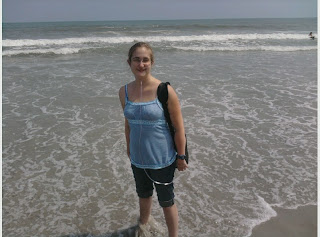
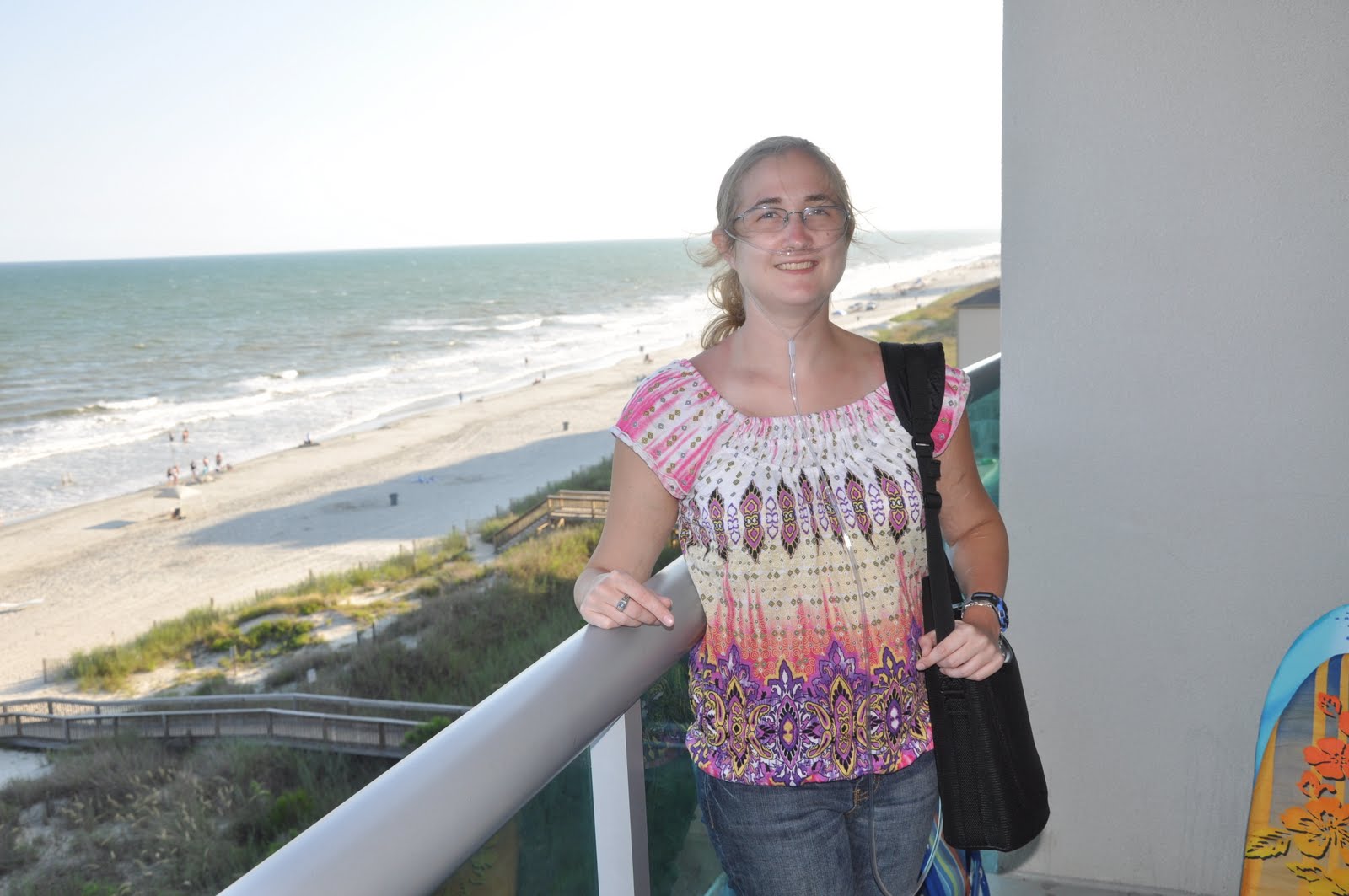
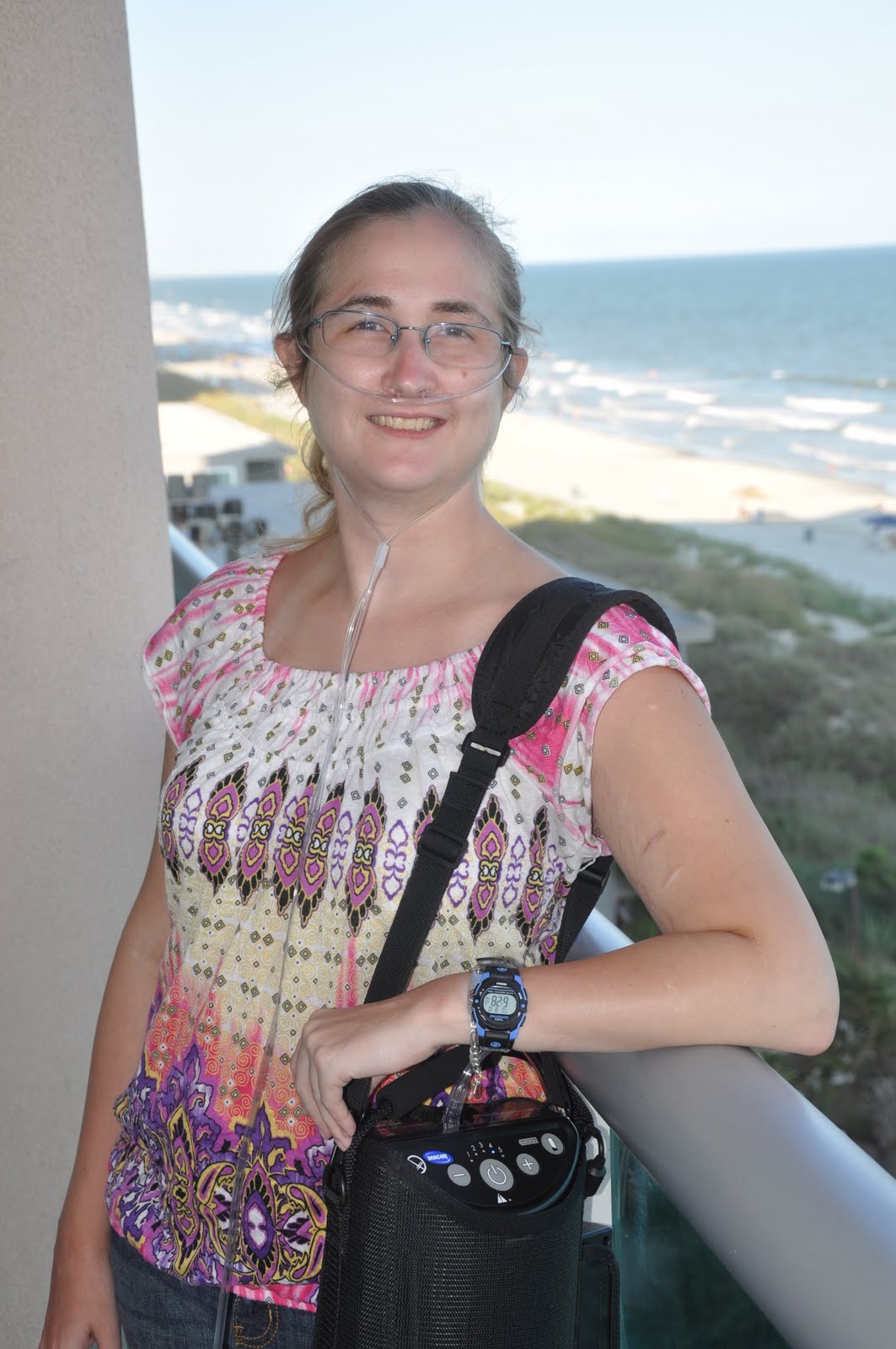
Myrtle Beach was exactly what I needed. For some reason my lungs always do so much better in the south, especially by the beach. It was rejuvenating to sit on the beach or by the pool. All too soon it has come to a close. Now it's back to the doctors' appointment ect. Oh, how it ends too quickly, but it was a much needed break.




Subscribe to:
Posts (Atom)